
Boston Legacy FC makes Pawtucket its home for the entire 2027 season
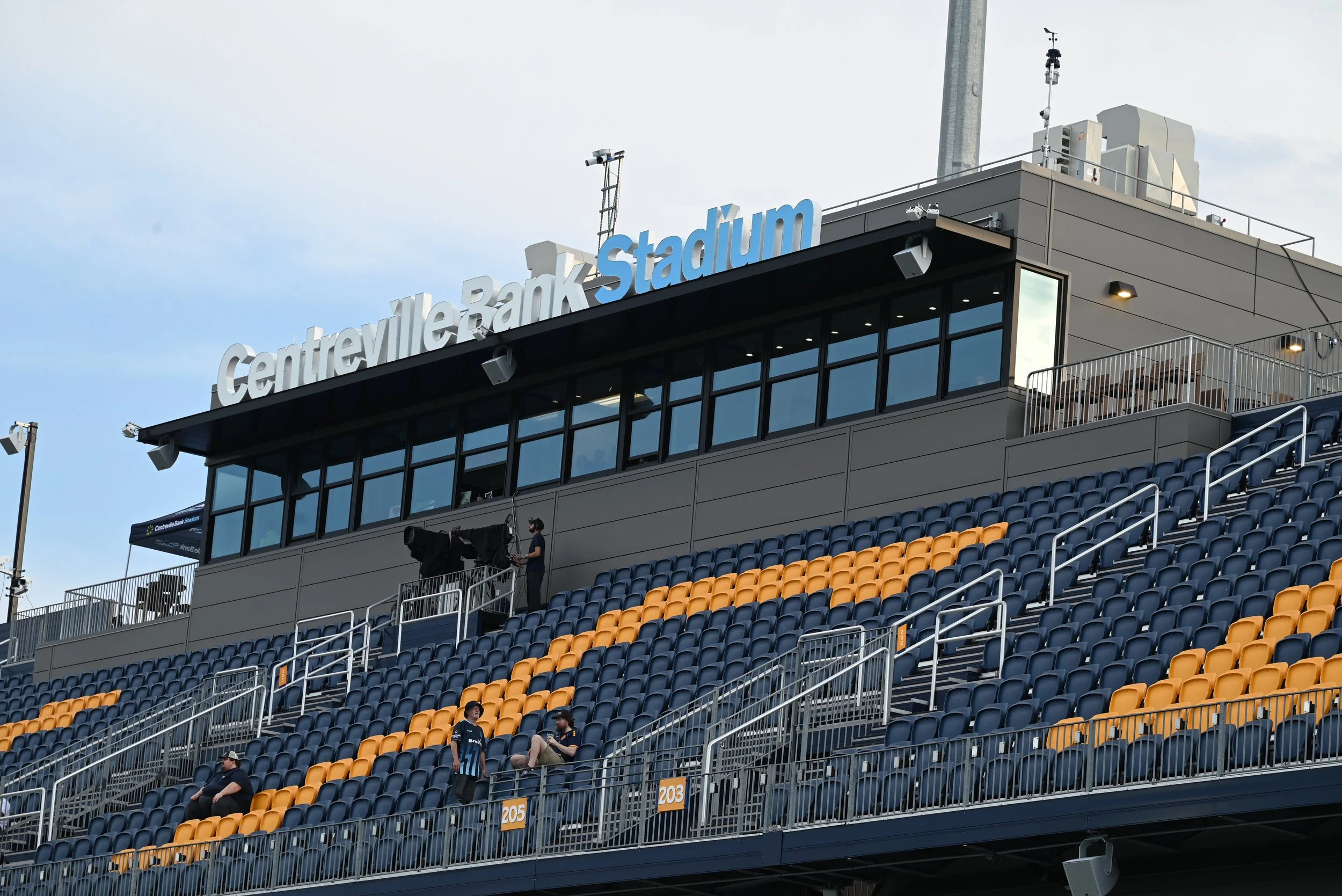
The NWSL club will play its entire 2027 home schedule at Centreville Bank Stadium, extending Rhode Island’s unexpected role in professional women’s soccer for another season.
Boston Legacy FC gives Pawtucket another year of imported work, but not a permanent solution
PAWTUCKET, R.I. — Rhode Island will get another year of professional soccer matches, stadium jobs, visiting supporters and spending that was originally supposed to belong to Boston.
It is good news for Pawtucket.
It is also temporary.
Boston Legacy FC will play its entire 2027 home schedule at Centreville Bank Stadium, extending the National Women’s Soccer League club’s stay in Rhode Island for a second full season while construction continues on its permanent home at White Stadium in Boston.
The announcement gives Pawtucket another year of imported economic activity from a neighboring state at a venue already built around the promise that professional soccer could help generate new life along the Seekonk River.
For local businesses, stadium workers and soccer supporters, there is little reason to complain about another season.
But Boston Legacy is still planning to leave.
The club announced that White Stadium will not be completed in time for the 2027 NWSL season and now expects to begin playing there in 2028.
Until then, Centreville Bank Stadium will remain the Legacy’s home field.
The 10,500-seat Pawtucket stadium opened in 2025 as the home of Rhode Island FC of the USL Championship. Boston Legacy also began playing there during its inaugural NWSL season, creating an unusual arrangement in which Rhode Island became home to professional men’s and women’s soccer clubs despite only one of them actually being a Rhode Island team.
That arrangement will now continue for another year.
And that matters beyond the soccer field.
Every additional Boston Legacy home game means another event requiring security, concessions, operations staff, parking, transportation and other game-day workers. It also means supporters arriving in Pawtucket who may spend money at restaurants, bars, gas stations and other businesses before and after matches.
Visiting teams bring their own spending through hotels, meals, transportation and other expenses.
Those effects become more meaningful when they happen repeatedly across an entire season rather than through a handful of isolated events.
Centreville Bank Stadium General Manager Paul Byrne said in the club’s announcement that the venue provides an intimate environment capable of creating a genuine home-field advantage.
For Pawtucket, though, the bigger question may be whether that home-field advantage can become an economic one.
The Legacy announcement comes at an important moment for a stadium project that was sold not simply as a place to watch soccer, but as part of a broader redevelopment effort around the Tidewater Landing site.
A second professional team playing an entire season in Pawtucket increases the number of nights when thousands of people potentially travel into the area.
That gives the city another opportunity to demonstrate what the stadium can generate when it is active.
It also creates another test.
A stadium can bring people into Pawtucket. The larger challenge is getting those people to spend money outside the stadium and creating enough surrounding development that the activity continues when no match is being played.
Boston Legacy cannot provide that solution by itself.
The club is ultimately headed to Boston.
Its permanent home will be White Stadium, a historic venue in Franklin Park that is being renovated through a partnership involving the club and the city of Boston.
The project has faced legal challenges, but Boston Legacy said the Massachusetts Supreme Judicial Court has now cleared the path for construction to continue.
The club says crews are working at the site six days per week.
When completed, White Stadium is expected to contain approximately 10,500 permanent seats. The stadium will remain owned by Boston Public Schools while also becoming the Legacy’s professional home.
That makes Pawtucket’s situation both valuable and unusual.
Rhode Island is receiving another year of economic activity attached to a Boston franchise without having to build an additional stadium for it.
At the same time, Rhode Island cannot build a long-term development strategy around a tenant whose stated goal is to leave.
A second season of Boston Legacy matches can create jobs and bring thousands of additional visitors into Pawtucket.
It can strengthen Centreville Bank Stadium’s reputation as a professional soccer venue.
It can expose more people from Massachusetts and elsewhere in New England to Pawtucket.
And it can provide another year of activity around a redevelopment project that still needs sustained traffic.
What it cannot do is guarantee what happens after the Legacy moves north.
Neither Boston Legacy nor Centreville Bank Stadium announced the financial terms of the 2027 arrangement.
They also did not say exactly how many Legacy matches will be played in Pawtucket or how the NWSL schedule will be coordinated with Rhode Island FC’s USL Championship home schedule.
SNN is reaching out to Boston Legacy, Centreville Bank Stadium and local officials for answers on the financial terms of the agreement, scheduling logistics and what the additional season could mean economically for Pawtucket.
So does the question of how much of the additional spending generated by Legacy matches actually remains in Pawtucket.
A successful stadium is not measured only by attendance inside its gates.
For taxpayers and city officials, the more important measurement is what happens around it.
Are nearby businesses seeing increased revenue?
Are new businesses opening because of game-day traffic?
Are additional workers being hired?
Is the surrounding Tidewater Landing development progressing?
And when Boston Legacy eventually leaves, will Pawtucket have created enough additional activity to replace what disappears with it?
Those are longer-term questions.
For now, Rhode Island has received something much simpler: another season of work, visitors and professional soccer that was originally destined for Massachusetts.
Pawtucket should take advantage of it.
But nobody should confuse another year of borrowed economic activity with a permanent economic plan.
Boston Legacy may call Centreville Bank Stadium home again in 2027.
By 2028, the club still intends to go home to Boston.
