
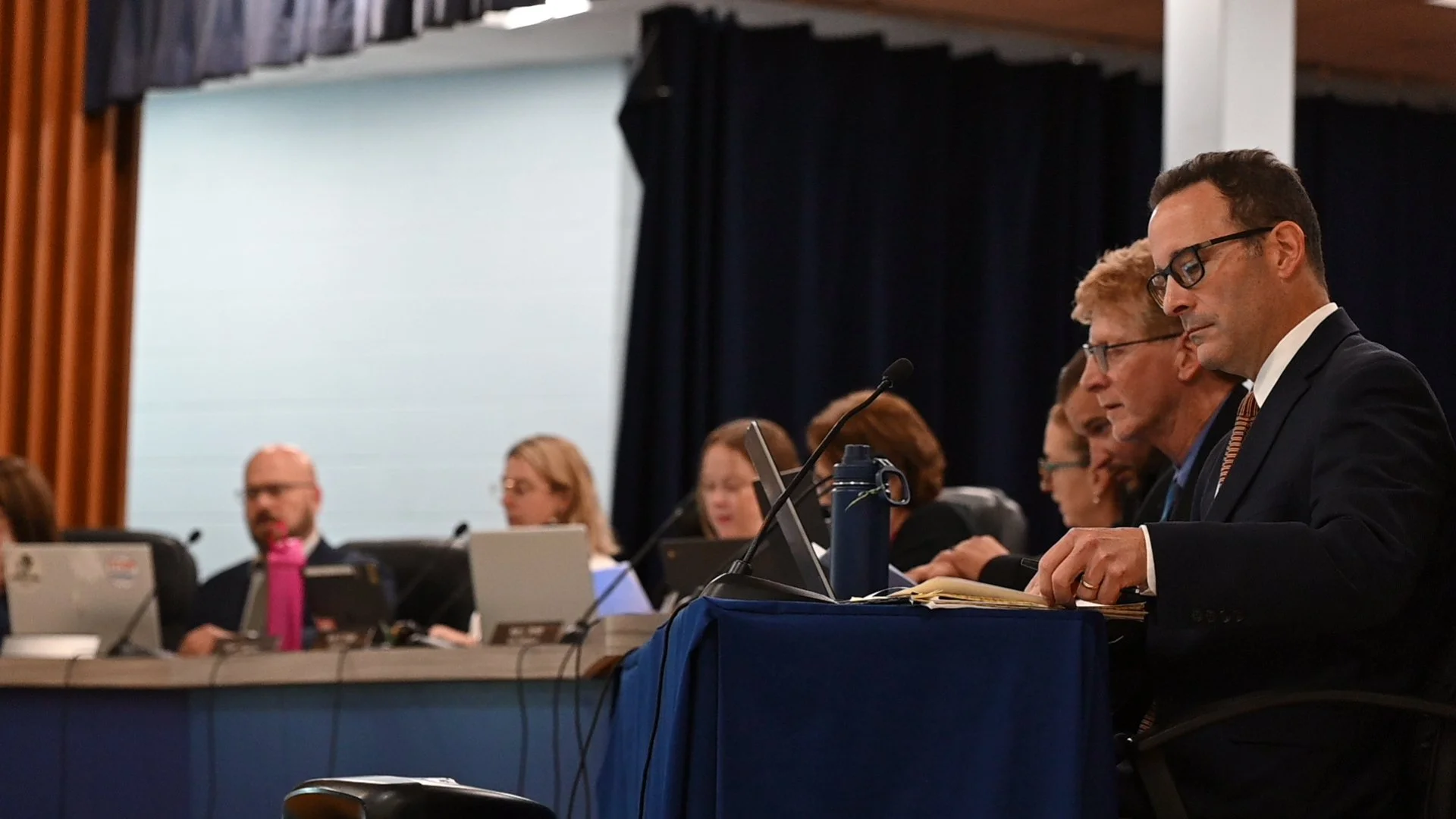
Cumberland School Board 10-22-2026
Festivus arrived early at the Cumberland School Committee meeting, and the residents supplied the grievances.
One neighbor approached the microphone with four decades of redistricting frustration.
The applause was loud. The patience was thin. And the questions were considerably better than the answers.
Thursday night’s public comment session exposed a problem larger than an unpopular school boundary proposal. Residents were challenging the judgment behind the process: the reliability of the information, the committee’s shifting position and the oversight of a consultant whose work could rearrange children’s lives. Before Cumberland asks families to trust another map, it needs to explain why they should trust the people directing the mapmaking.
Heather Trenteseaux , a Stagecoach road resident, offered perhaps the evening’s most exhausting perspective: “My neighborhood has been redistricting for 40 years.”
Forty years is a long time to feel like your neighborhood remains a problem awaiting someone else’s solution.
“It’s a dumpster fire,” she later added as the allotted three minutes of time ran out.
Michael Mardo, a Sharon Drive resident, questioned how quickly the committee’s position had changed and what had happened in a single week to account for it. That is a fair question. Elected officials can reconsider a position. When they do, the public deserves to hear what new information changed their minds.
As Mardo’s time expired, he borrowed a farewell from The Terminator: ‘I’ll be back.’”
These residents keep returning, giving up evenings with their families because the questions keep returning with them
Gary Pelissier brought one of the most important to the microphone: “Who’s the owner of the contract?”
Someone should be able to answer that without a conference.
Who is responsible for making sure TransPar delivers what Cumberland purchased? Who checks the work against the agreement? Who decides whether a deliverable is complete, whether an additional charge is justified and whether the district has received value for its money?
An approximately $80,000 engagement should come with an identifiable person responsible for those answers.
Pelissier also pressed the question of legal review, revisiting attorney Stephen Adams’ earlier statement that he had not seen the TransPar contract.
If the committee’s legal counsel had not reviewed the agreement, residents deserve a direct explanation of who did review it and when. Perhaps there is an explanation for how that responsibility was assigned. Then give it.
The public should not have to reconstruct the chain of responsibility during its three minutes at the microphone.
Brian Babb followed with his own announcement.
“I’m back,” he said in a sing-song tone.
He thanked the three members who had opposed pressing ahead, as other speakers had done, then returned to the questions about contracts and legal spending.
Babb cited substantial figures across several fiscal years and challenged what he described as overage charges. I have asked him for the supporting documentation. Those numbers deserve examination before they become conclusions about what Adams received, what the district authorized or whether any charge exceeded an agreement.
The underlying demand is straightforward enough: Show residents the agreement, the invoices, the authorizations and the explanation.
Adams smiled during portions of Babb’s remarks. I cannot tell readers what that smile meant. I can say that, from where I sat, it was a jarring expression to see while a resident questioned the use of public money.
An answer would have done more to reassure the room.
Later, committee member Andrew Bacon raised another question that should have been easier than it appeared to be: Could members actually talk with residents during public comment?
Could they respond like people having a conversation, rather than sit silently through another round of frustration?
Adams’ response took a winding route toward the committee’s authority to establish its own procedures. The practical question remained remarkably simple: What would it take to create a useful exchange?
Nobody needs seven simultaneous arguments from the dais. Residents do need some way to ask a factual question and receive a factual answer, or at least learn who will provide one and when.
A public comment period can satisfy the schedule while leaving everyone in the room feeling unheard.
The meeting recording cannot fully convey what it felt like to sit among those reactions. The clapping had force behind it. These were neighbors recognizing their own concerns in someone else’s words.
One parent described a child facing another middle school change after already changing middle schools.
On a planning document, that child becomes an enrollment adjustment. At home, the adjustment involves friendships, routines, anxiety and another explanation from a parent who did not choose any of it.
Cumberland has real capacity problems to address. A growing district cannot promise that every school assignment will remain untouched forever. But every proposed move carries a cost that does not appear in the transportation column.
The committee needs to demonstrate that it has weighed that cost against credible alternatives.
I left wondering how broadly those alternatives are being considered.
Could the transitional building accommodate an eighth-grade program for students heading to Cumberland High School the following year? What space is actually available? What would such a configuration require in staffing, transportation, accessibility and facilities?
The building currently accommodates preschool programming, among other uses. Its size makes me question whether the district has examined its full potential, but appearances cannot establish usable capacity. That requires an actual inventory.
Preschool families also deserve stability, and any proposal would have to account for the children’s services and transportation needs. Moving younger children is not automatically simple because they are younger.
Still, the district should be able to show whether it evaluated the idea and what it found.
The same applies to grade configurations. My elementary school on Long Island ran from kindergarten through sixth grade. Cumberland’s current arrangement is familiar to Cumberland. That alone does not establish that it is the only arrangement worth studying.
Some alternatives will prove impractical. Explain why. Put the space, staffing, costs and educational consequences beside one another so residents can assess the reasoning.
That is how officials earn confidence in a difficult decision.
We have asked Cumberland’s children to show their work. The adults spending public money and deciding where those children attend school should be prepared to do the same.
On Seinfeld, the airing of grievances was entertainment. Thursday night, it was parents spending another evening asking who reviewed the contract, who checked the numbers and why their children might have to change schools again.
They should not have to come back to ask the same questions.
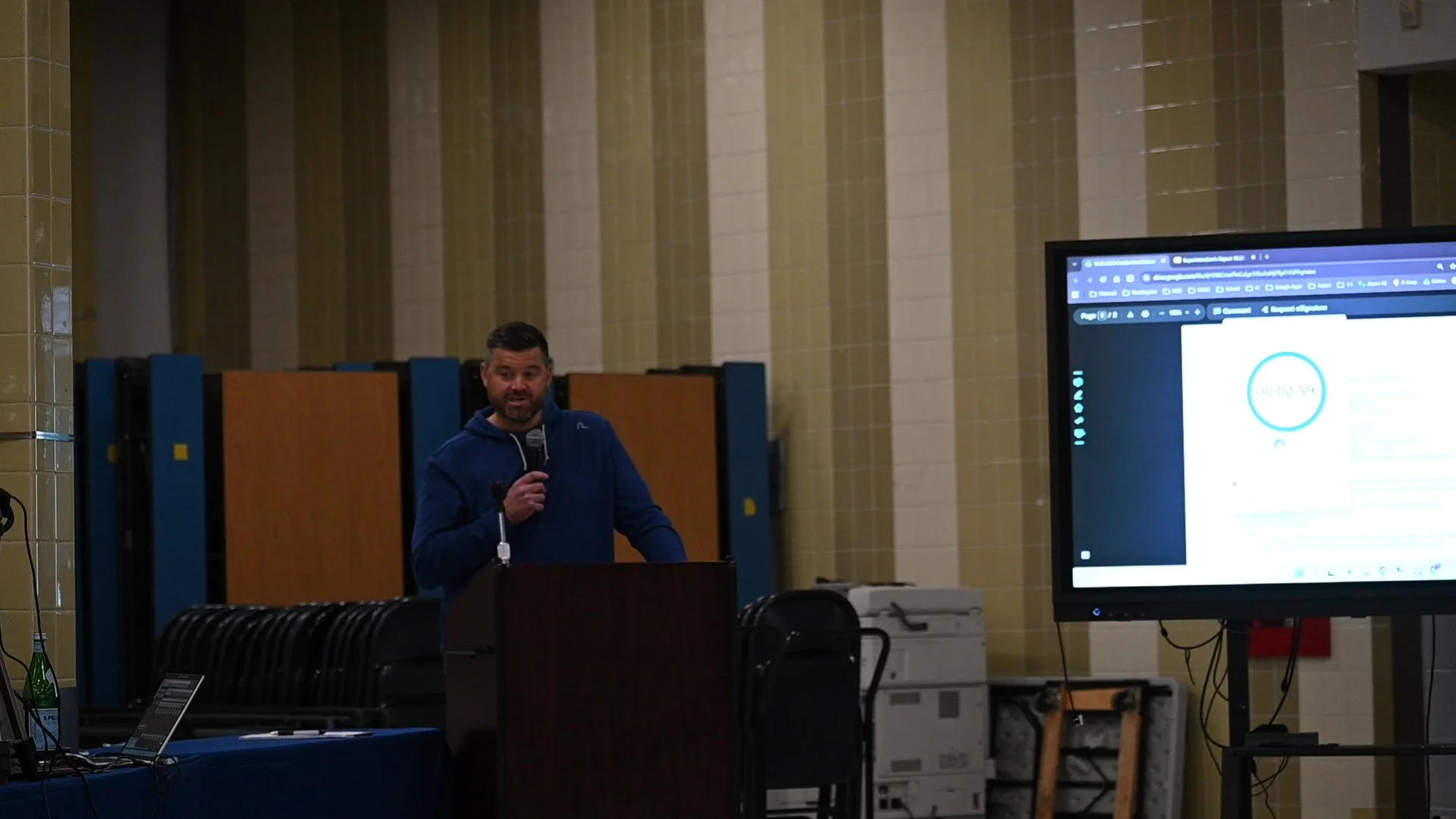
Cargill Road resident Tom Myers 10-22-2026
